Five Things I Would Not Do If I Were Job Hunting
Episode 336 - If I were job hunting now, I would not apply at scale, outsource my voice to AI, or wait until I was unemployed to build visibility. This article explains five common mistakes experienced professionals should avoid and how to make the job search more strategic.
If I were job hunting in 2026, I would not start by asking how many jobs I should apply for each week. I would ask a more useful question: what would genuinely improve my odds?
That shift matters because the job search has become more efficient and more frustrating at the same time. Candidates can now use artificial intelligence to write resumes, tailor cover letters, prepare for interviews, research employers, and apply for more jobs in less time. Employers are also using AI to screen, sort, compare, and manage applicants. In theory, this should make hiring easier. In practice, it has made the process noisier.
A 2026 Robert Half survey found that 67% of HR leaders say AI-generated applications are slowing hiring, 84% of HR teams report heavier workloads as AI-tailored applications increase, and 65% of hiring managers say AI-enhanced resumes make skills harder to verify. This is the paradox of the 2026 job search: job seekers can apply faster, but hiring managers are finding it harder to trust what they read.
For experienced professionals, especially those in their 40s, 50s, and 60s, the answer is not to join the noise. The answer is to become sharper, more credible, and more strategic. There are five things I would not do if I were job hunting now.
1. I Would Not Apply at Scale and Call it a Strategy
Applying for jobs feels productive. It gives you something to count, and for a few hours it can quiet the anxiety that often comes with looking for work. When you are unemployed, worried about money, or feeling pressure from family and friends, sending another application can feel like the responsible thing to do.
But more applications do not automatically mean better odds. For many experienced professionals, the opposite is true. The more broadly they apply, the less time they spend understanding the role, the organization, the decision-makers, the selection criteria, and the business problem behind the vacancy.
A job application is not a lottery ticket. It is a business case. You are making a case for why you, with your background, judgment, relationships, track record, and future potential, should be invited into a conversation. That takes more thought than many job seekers are giving it, especially now that technology has made it so easy to generate documents quickly.
Before applying, I would ask whether the role is genuinely aligned with my experience, whether I can see a strong match between the job description and my achievements, and whether I understand what problem the organization is trying to solve by hiring this person now. I would also ask whether I know someone who can give me context before I apply, and whether I can clearly and calmly explain why I am a credible candidate.
That last question is important. If you cannot explain why you are credible, the hiring manager will struggle to see it too. This does not mean you should only apply for perfect roles. Perfect roles are rare. But not every job deserves the same level of time, energy, and hope.
Some roles are within your career DNA. Others are further away. Career transitions are possible, but they require stronger communication, not a higher number of applications. Applying selectively can feel slower, especially when the job search is making you anxious, but discernment is part of the strategy.
The job market is not uniformly weak, but it is uneven. Indeed Hiring Lab’s January 2026 labor market update noted that while hiring activity remained subdued, pockets of growth were emerging in roles and skills tied to AI. That is another reason discernment matters. Applying to everything can make you feel busy. Applying selectively can make you more competitive.
2. I Would Not Let AI Remove My Voice
I use AI, and I teach clients how to use it. I think it can be a powerful tool for job seekers when it is used properly. It can help you compare job descriptions, identify gaps, run a SWOT analysis, prepare for interviews, research companies, and improve the structure of your resume and LinkedIn profile.
But I would not hand over my entire job search to it. AI should support your thinking. It should not replace your thinking.
This is one of the biggest risks I see now. A candidate’s resume is polished, but it sounds like everyone else’s resume. The cover letter is grammatically correct, but there is no point of view. The LinkedIn profile has the right keywords, but no personality, no story, and no evidence of judgment. Then the candidate gets to the interview and cannot speak naturally about the material that supposedly represents them.
That is a problem. In 2026, employers are not impressed simply because your documents are well written. Everyone can produce well-written documents now. What employers are looking for is evidence: evidence that you understand the work, evidence that you can solve problems, evidence that you can communicate with stakeholders, and evidence that you can use technology without hiding behind it.
The World Economic Forum’s Future of Jobs Report 2025 identified analytical thinking, resilience, flexibility, leadership, and AI-related skills among the capabilities employers expect to matter. That is useful information for job seekers, but it also creates a challenge. These are not skills you can prove with keywords alone.
You need stories. You need examples. You need judgment. You need to show that you can think, not merely that you can prompt a tool.
I would use AI to become more prepared, but I would not let AI flatten my experience. Your resume needs your words. Your LinkedIn profile needs your judgment. Your interview answers need your stories. The goal is to sound prepared, not manufactured.
3. I Would Not Wait Until I Needed a Job to Build Visibility
Many senior professionals have spent decades being rewarded for doing good work quietly. They believe their track record should speak for itself. In an ideal world, perhaps it would. But in the real world, people need to understand what you do, what you are known for, and where you add value before an opportunity appears.
Visibility is not vanity. For experienced professionals, visibility is risk management. It gives people a reason to remember you before they need you, refer you, or recommend you.
This does not mean you need to become an influencer. You do not need to post every day, perform online, or build a personal brand that feels uncomfortable. But you do need to be findable, credible, and clear. That is now part of professional life, especially for people who want opportunities to come through networks, recruiters, referrals, boards, industry contacts, or former colleagues.
If I were job hunting, I would make sure my LinkedIn profile was not simply a copy of my resume. I would write one strong article on a topic related to my expertise. I would comment thoughtfully on posts from people in my industry. I would reconnect with former colleagues before I needed something from them.
I would also not rely only on digital visibility. Face-to-face connection still matters. Coffee meetings, conferences, industry events, professional associations, and in-person conversations can rebuild the weak ties that often lead to opportunities. Many professionals have become less intentional about this since remote and hybrid work became normal, and that has consequences over time.
Microsoft’s 2025 Work Trend Index points to a future where AI changes how work is designed and how people contribute. That makes human credibility even more valuable. Employers need to see not only what you have done, but how you think, how you adapt, and whether you are still current in your profession.
For experienced professionals, visibility helps answer a question employers may not say out loud: can I trust this person to stay current, communicate clearly, and contribute at the right level? Your resume shows your history. Your visibility helps people understand your relevance.
4. I Would Not Spend Money On More Education Before Diagnosing the Real Problem
When a job search stalls, many professionals assume they need another qualification. They start thinking about an MBA, an executive leadership program, a certification, or even a complete career change. Sometimes education is the answer. Often, it is not the first answer.
Before investing time and money, I would ask what problem I am trying to solve. Am I closing a genuine skills gap? Am I trying to signal that I am current? Am I trying to build confidence? Am I trying to change industries? Am I trying to compensate for age bias? Am I trying to differentiate myself from other candidates? Or am I trying to delay the discomfort of the job search for a little longer?
Each of those problems requires a different solution. If the issue is differentiation, you may not need a degree. You may need a stronger LinkedIn profile, a better resume, a clearer career story, or a visible piece of thought leadership. If the issue is currency, you may not need a two-year program. You may need a short AI course, a practical project, a case study, or evidence that you understand how your industry is changing. If the issue is confidence, another qualification may not fix it. You may need interview practice and better language to explain the value of your experience.
Deloitte’s 2026 Global Human Capital Trends argues that traditional change management and training may be too slow for the pace at which work is changing, and that workers will need to learn and adapt in the flow of work. McKinsey’s State of AI: Global Survey 2025 also shows that AI is already changing workforce size and expectations across business functions. These findings do not mean every professional needs to return to university. They do suggest that professionals need to be more deliberate about how they stay current.
This is not an argument against education. It is an argument for diagnosis. Sometimes the signal you need is smaller and more strategic than you think: a short course, an article, a board paper, a case study, a stronger career story, or a sharper explanation of your scale, scope, and achievements.
The goal is not to collect credentials. The goal is to reduce doubt in the mind of the employer.
5. I Would Not Ignore the Data From My Own Job Search
Rejection feels personal. Over time, it also becomes data.
Not every rejection can be explained. Sometimes there is an internal candidate. Sometimes the role is withdrawn. Sometimes the budget changes. Sometimes the hiring manager already has someone in mind. Some processes are poorly run, and some decisions will never be visible to you.
But if you have been job hunting for a while, patterns usually appear. If you are applying for roles and getting no interviews, the bottleneck may be your application strategy. It could be your resume, the roles you are targeting, the timing of your application, your seniority level, or the lack of network support behind the application.
If you are getting interviews but not progressing, the bottleneck may be your interview performance. It could be your career story, how you explain a transition, your executive presence, or whether you are giving enough evidence. If you are getting to final interviews but not receiving offers, the bottleneck may be stakeholder fit, references, salary expectations, or how you close the conversation.
This is where job hunting becomes less emotional and more strategic. The goal is not to remove uncertainty. That is impossible. The goal is to improve the odds.
Instead of saying, “Nothing is working,” ask where exactly the process is breaking down. Are you getting interviews? Are you progressing to final interviews? Are you receiving useful feedback? Are you choosing the right roles? Are you showing enough evidence? Are you communicating the right level of seniority?
That is how you improve. Not by blaming yourself, and not by blaming the market entirely, but by studying the process.
The Job Search in 2026 Rewards Evidence
The job market is difficult. I am not going to pretend otherwise. But difficult does not mean impossible. Somebody will be hired. The question is how you improve your chances of being that person.
The professionals doing better are not always the ones applying for the most roles. They are the ones making better decisions, building stronger evidence, communicating more clearly, and learning from each stage of the process.
If you are job hunting now, the question is not only what else you should do. A better question might be what you should stop doing. Sometimes progress begins there: with doing less of what is not working, and more of what helps the right people understand your value.
A Note for Australian Readers
This article is being published at the beginning of June 2026. In Australia, June marks the end of the financial year, as it does in some other countries. If you are considering investing in career coaching, career transition support, resume support, LinkedIn profile development, interview preparation, or professional development, this may be a useful time to explore your options.
I am not a tax adviser, and this is not tax advice. Everyone’s situation is different. Depending on where you live, the type of work you do, and how the support relates to your current income-earning activities, some professional development expenses may be tax deductible. Please check with your accountant, tax adviser, or relevant tax authority before making any decisions on that basis. The Australian Taxation Office provides general information about work-related education and training deductions.
If you would like support with your career strategy, job search, LinkedIn profile, resume, or interview preparation, you can visit renatabernarde.com and book an introductory meeting, or review the services, programs, and courses available.
About the Host, Renata Bernarde
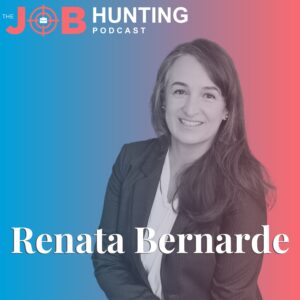
Hello, I’m Renata Bernarde, the Host of The Job Hunting Podcast. I’m also an executive coach, job hunting expert, and career strategist. I teach professionals (corporate, non-profit, and public) the steps and frameworks to help them find great jobs, change, and advance their careers with confidence and less stress.
If you are an ambitious professional who is keen to develop a robust career plan, if you are looking to find your next job or promotion, or if you want to keep a finger on the pulse of the job market so that when you are ready, and an opportunity arises, you can hit the ground running, then this podcast is for you.
Resources Mentioned in This Episode
Timestamps to Guide Your Listening
- 00:00 Introduction to Job Hunting Challenges
- 00:50 Stop Applying at Scale
- 06:39 The Role of AI in Job Applications
- 10:11 Building Visibility Before Job Seeking
- 14:08 Education vs. Real Career Problems
- 18:27 Analyzing Job Search Data for Improvement
Transcript
If I were job hunting right now, there are five things I would not be doing. And I want to say this carefully because I know many of you listening are tired. You may have applied for many roles, you may have rewritten your resume several times, have used ChatGPT and LinkedIn and job boards and recruiters and networking and all of the things. And still the process may feel slower, more opaque, and more frustrating than you have expected.
So today I want to keep this episode really simple. This is not a motivational talk, this is a reset for you. If I were job seeking now, knowing what I know from coaching my clients and interviewing experts on this podcast, watching the job market and seeing what’s working and what’s not working, these are the five things that I would stop doing.
You know, sometimes the biggest improvements in a job search does not come from adding more tasks. It comes from removing the things that are wasting your energy. So let’s go.
Okay, so first off the list
Would be I would not be applying at scale and call it a strategy. This is the first thing I would stop doing if I were you. I would not apply for many, many, many jobs every week just because AI now makes it easier to do. Sometimes it’s not even about the number of jobs that you apply for per week. It’s about, ⁓ I’ll just apply for this one. You know, I’ll just see how it goes. I might as well just apply for one more. I understand.
Why people do it? I really do. I’ve been in your shoes. When you are anxious, unemployed, under pressure, worried about money, applying for more jobs feels productive. It gives you something to count. It feels like an action. But more applications do not automatically mean better odds. In fact, for many of my clients who are experienced professionals, the opposite may happen. The more you apply without
Discernment, the less time you have to understand the role, understand the organization, what is the problem that they are trying to solve by advertising this position. Understanding their decision makers, the selection criteria, and how your experience needs to be positioned to give you a chance to be shortlisted. A job application is not a lottery ticket. Let me repeat that. ⁓
Lottery ticket. It’s a business case, right? It’s a business case. You are making a case for why you, with your background, your judgment, your relationships, your track record, and your future potential should be invited into a conversation with the decision makers for that job.
That takes thought. That takes time. So if I were job hunting today, I would be asking better questions before applying. Is this the role that truly aligned with my experience? Can I see a strong match between the job description and my achievements? And yes, this means you will have to wait until those roles come about. It will make you feel like, my god, you know, I’m
not moving forward as fast as I can. Again, it’s that concept of appla the number of applications feeling like a productive time of your job search time. I don’t believe that that will help you. Do I understand, you know, what the problem in this organization is, you know, the that sort of that sort of thinking about what it is that they’re trying to solve. What is it that they’re trying to figure out by ⁓
having this new person join the organization, advertising this role now that whoever has left the position. Understanding what the problem is is key for you to move forward to the short list and be interviewed for that job.
You can also ask, do I know anyone who can give me context? So some people that have worked with me said that in the past they would apply and then try to find people that worked there and then let them know that they had applied maybe a week or two after they had applied for the job. That doesn’t really work. Ideally, you want to get context before applying.
The other question is can I explain clearly and calmly why I’m I am a credible candidate? Right? So this is really important. If that is not really clear for you, then
We need to workshop that and see if you really need to apply for this. This is the sort of work that I do with clients when they start working with me. They send the job ads that they see advertised and we run together, you know, we workshop things together, we brainstorm things together. I also teach them how to use AI to do some of that analysis because it becomes less emotional and easier to understand the rationality about your chances of moving forward for a position.
And if the answer is no to all of the questions that I’ve just mentioned, I would pause and think. That does not mean I would only apply for perfect roles. Perfect roles are rare, but I would stop treating every job ⁓ as equal, right? They’re not. There are jobs that are more within your lane, your career DNA, and there are jobs that are more outside your DNA. And that’s not to say that you cannot do the transition to a different.
industry, a different sector, a different area of expertise, but it will require you know a lot of reflection and and better communication of what you’re trying to achieve to people that are reading your application.
The job market is noisy, right? And AI has made it noisier. Candidates can apply faster now, and employers are receiving more and more generic applications. So the answer is not to be noisier with everybody else, the answer is to be sharper, right?
Alright, so now let’s move to the second thing I would not be doing and that is really important. I’ve just mentioned AI and I would say that the second thing that you should not be doing is letting AI remove your voice.
I would not do this at all. That entire job search handed over to AI is a terrible idea. Now, you know that I use AI. I teach clients how to use it. I think it can be incredibly helpful. But AI should support your thinking. It should not replace your thinking. This is one of the biggest mistakes I see job seekers make right now. Their resume is polished, but it sounds like everyone.
else’s resume, their cover letter is grammatically perfect, but there’s no imprint there from them. There’s no point of view. Their LinkedIn profile has all the right words but no personality, no story, no evidence of their personal judgment.
Even their thought leadership sounds generic. And then they get to the interview and they cannot speak naturally about the material that supposedly represents them because it doesn’t. And that is a problem. So in 2026 and beyond, employers are not impressed simply because your documents are well written. Everybody else’s documents are well written. Everyone can produce now well written documents. What employers are looking for
Looking for is evidence. Evidence that you understand the work, evidence that you can solve problems, evidence that you can communicate with stakeholders, with them, with the employer, evidence that you can use technology without hiding behind it. Talking about AI with that confidence is also really important. So, yes, I would use AI to help you tailor your resumes. I would use it to identify guess.
Caps, do SWOT analysis. I would use it to prepare for interviews. I would use it to research companies, compare jobs descriptions, and practice your responses. But I would not let AI flatten your experience. Your resume needs your words, it needs your voice. Your LinkedIn profile needs your judgment. Your interview answers need your stories. And
The way that you position yourself needs to sound like you so that you have the confidence to keep the conversation going at an interview. So AI can help you become more prepared. It should not make you sound less human, right? So that’s really, really important.
Now, the third thing I would not do is I would not wait until I needed a job to build visibility. Last night I received a great email from somebody that touched base with me a few months ago and said he wanted to work with me. But at the time he was at the tail end of an interview process. And I said, look, you have to see what will happen because it will change your decision and the way that we work together.
Turns out he got the job and a few months later he emailed me and said, Let’s work together. How can we work together? I love somebody that is proactive, that
works with a coach, you know, before they need it. They they work to develop their future career planning. That for me is my ideal client. So that’s the third thing I would not do is to wait until I was unemployed before I become visible. This is really hard for many professionals that I work with. You know, usually my clients are over 40 and that’s because they have spent decades being rewarded for doing good work quite
They believe their track record should speak for itself, and in an ideal world, maybe it would, but in the real world, people need to understand what you do, what you are known for, and where you add value before the job opportunity appears. Your reputation is being formed all the time. Inside your organization, people are talking about your work. Outside of your organization, your LinkedIn profile, what you write.
Your articles, your comments, your posts. Maybe you’ve been interviewed by a podcast, maybe you attended a conference and you’ve been on a panel or you be you were a speaker, your professional associations, your volunteering work, and your network, all of that contribute to how people understand you. That does not mean everybody needs to become an influencer, right? Please do not hear me say that.
You do not need post every day, you do not need to dance on TikTok, you do not need to build a personal brand that feels performative and uncomfortable to you. But you do need to be findable, credible, and clear.
If I were job hunting, I would make sure my LinkedIn profile was not simply a copy of my resume. I would write one strong LinkedIn article on a topic related to my expertise and I would comment regularly, not just nurturing comments like
Congratulations on this new job, well done. I would also comment thoughtfully on posts from people on my in my industry. And I would reconnect with former colleagues before I needed something from them. You know, I think we’ve become quite complacent and frankly lazy, ⁓ working hybridly or remotely and not really catching up with people face to face anymore. That is very bad for your career in the long term, you know.
Having coffees and catch ups, going to events and conferences, being in front of people in real life is really important. And I would make sure that recruiters and hiring managers could quickly understand what I do and why it matters. Visibility is not vanity. Let me repeat that. I have many clients that need to listen to this too. Visibility is not vanity. For experienced professionals.
professionals, visibility is risk management. It gives people a reason to remember you before they need you and refer you to an opportunity.
Okay, the fourth thing that I would not be doing is I would not spend money on more education before diagnosing the real problem in my career.
So the fourth thing is not to rush into expensive education because my job search feels stuck, because I feel stuck, because I don’t know what to do. This is very common. It’s putting the wagon before the horse. Is that how you say it? So it’s it’s very common. Someone has been looking for work for a few months, they are not getting interviews, their confidence drops, and then they start thinking, maybe I need another degree.
Maybe what I need is an MBA or an executive leadership program. Maybe I need a certification. Maybe I need to retrain completely. You see, sometimes education is the answer. Yes, I teach at Monash University, so I know. I’ve been in higher education for a long time. I’m a fellow at the University of Melbourne, again, helping them with executive education. But let me tell you, often it is not the first answer.
Before you invest time and money, you have to ask yourself, what problem am I trying to solve? Am I trying to close a genuine skill gap? Am I trying to signal that I am current? Am I crystallizing something that I already have in my repertoire, but I don’t have the certification for it? Am I trying to build confidence?
Am I trying to change industries? Am I trying to compensate for age bias? Am I trying to differentiate myself from other candidates? That can also be the thing. Or am I trying to procrastinate and just delay that jumps edge for a little bit longer because I don’t feel confident enough to move forward or brave enough to move forward?
So each of these problems may require a different solution. If the issue is differentiation, you may not need a degree. You may need a stronger LinkedIn profile, probably working with a coach or a better resume, a clear career story, a visible piece of thought leadership, like that article that I mentioned before. If the issue is currency, you may not need a two year program. Maybe what you need is a short AI course, a practical
project that you do or evidence that you understand how your industry is changing. Sometimes all you need to do is just read, read daily the news about your industry and have that discipline of being in touch with what’s happening around the world.
In your industry, sector, country, you know, the business news. If the issue is confidence, another qualification may not fix it. You may need interview practice, you may need better language to explain the value of your experience. I have seen many clients get better results from a simple, focused piece of positioning than from months of extra study. If I were job hunting now, I would be very
Very careful before overcapitalizing on my career while unemployed. So I want you to really think about that. I would choose small strategic signals first, maybe a free course, an important article, a portfolio example, a board paper, a case study, a strong career story.
all of those things that I usually help clients develop as part of their coaching program with me. The goal is not to collect credentials, the goal is to reduce doubt in the mind of the employer, right? And to make you sort of more aware of the repertoire of experiences and
and metrics and scale and scope that you bring into another role. So I think sometimes because we are doing our jobs day to day, we normalize our achievements, we normalize normalize our expertise and they we don’t see them as special. So that is really important. That self-reflection and and identification of what you have already created and developed is really important and part of you know ⁓ a a good coaching program.
Okay, let’s go to the fifth and final thing that I would not do. I would not ignore the data from my own job search. This is so important, and very few people do this. I would not.
Treat rejection as a random thing. Of course, some rejection is random. Okay, sometimes there is an internal candidate, sometimes the role is withdrawn, sometimes the budget changes, sometimes the hiring manager already has somebody in mind. Yes, that is totally true. But if you have been job hunting for a while,
and you have a sample of rejections, there is usually data in the process. The question is, are you looking at that data? If you are applying for roles and getting no interviews, that tell us something. The bottleneck is your application.
It may be your resume, it may be the roles that you’re targeting, it may be that you are applying too late, you know, waiting too long to send your application. It may be that your experience is not aligned, it’s a different level than your expertise, either up or down. It may be that you are not using your network to support your application. So if you aren’t getting
interviews but not progressing to a job offer.
that tells us something else. It may be that your executive presence needs work. It may be that your career story needs work. ⁓ It could be the way that you’re explaining your transition. That is a really hard one for many people. ⁓ It may be that you are too broad and not crisp and clear enough about your experience and your expertise.
Or maybe you’re not giving enough evidence of that. It may be that you are answering the questions but not building trust. Sometimes even the tone of you know and and the way that you present yourself, I mentioned executive presence before, that doesn’t build trust and rapport, right? So if you are getting to the very final interview but not receiving offers, that is, you know, even another pattern.
Okay, it could be that ⁓ there is a lack of stakeholder fit. ⁓ again executive presence could be an issue, it may be the salary range that you have requested, it may be the references, the references you know at that tail end are really important. It may be that you’re not closing the conversation strongly enough.
So this is where job hunting becomes less emotional and more strategic. And I often tell clients we are not trying to remove all of the uncertainties. That is impossible, but we are trying to remove or actually, we are trying to improve the odds, right? So instead of saying nothing is working, I would ask, where exactly is it breaking down?
Am I not getting interviews? Am I progressing to final interviews and not being offered the role? Am I receiving useful feedback? Am I choosing the right roles to apply for? Am I showing enough evidence of my expertise? Communicating the right level of seniority?
That is how you improve. Not by blaming yourself, not by blaming the market, but by studying the process. Building a sample so that you can study the process can get you ahead of the game.
So there you go, those are the five things that I would not do if I were job hunting. I would not apply at scale and call it a strategy. I would not let AI remove my voice. I would not wait until I needed a job to build visibility, and I would not spend money on more education before diagnosing the real problem. And finally, I would not ignore data from my own job search.
The job market is difficult. I am not going to pretend otherwise, but difficult does not mean impossible.
My role as a career coach is to get my clients and my listeners for this podcast at the top of the pile, right? Somebody’s gonna get hired, and I want that somebody to be you. That’s why I do what I do. So the professionals who are doing better are not always the ones applying for the most roles. They are the ones making better decisions, building stronger evidence, communicating more clearly, and learning from each stage of the process. Some people do this more naturally.
Just you know it comes more naturally to them. Others need a little bit of help by listening to a podcast like this to get that strategy put together. And if you’re job hunting now, I want you to think about one thing from today’s episode. What is one thing you could do or you could stop doing this week to give you better odds in your job search in the future?
Sometimes that’s where progress begins, not with doing more, with doing less of what is not working, and doing more of what actually helps the right people understand your value.
Before I finish, I want to mention something. This episode is coming out at the beginning of June 2026, and in Australia as well as in other countries, June marks the end of the financial year.
So, this may be a good time to think about whether you want to invest in your career before the financial year closes. Now, I’m not a tax advisor, and this is not tax advice. Everyone’s situation is different, and look, depending on where you live, the type of work you do, and how career coaching relates to your current role and income earning activities, some professional development expenses may be tax-deductible. Please check with your accountant, tax advisor.
Advisor or relevant tax authority before making any decisions on that basis. I need to add this disclaimer there.
But what I can say is this: if you have been thinking about getting support with your job search, your career transition, your LinkedIn profile, your resume, interview preparation, or your overall career strategy, this could be the right time to explore your options. You do not need to wait until things become urgent. You can go to my website, renatabernarde.com. That’s R-E-N-A-T-A-B-E-R-N-A-R-D-E.com.
And book an introductory meeting with me if you want to be coached by me, or you can also look through the different services and programs and courses that I have available there and choose what feels aligned with your goals, your appetite for investment, and your budget. Maybe this is the year you want to make that big change, find a better role, reposition yourself, or simply feel more confident about your next career move.
Now is a good time to take that first step. I would love to support you. Bye for now and I will see you at the next episode. Bye!
Related Posts
The Salary Question Job Seekers Hate Most Reveals More About The Employer Than The Candidate
Confidence Is Overrated. Here’s What Actually Gets You Hired.
How Financial Stress Shapes Your Career Decisions

Why Good Work No Longer Speaks For Itself
The 7 LinkedIn Questions My Clients Ask Most Often